Labs – SCIENCE
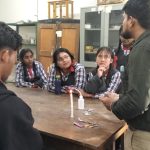
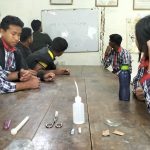
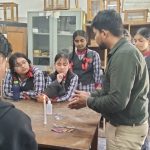
1. Magnesium Ribbon Burning Activity: A clean magnesium ribbon is held with tongs and heated over a Bunsen burner or candle flame. After a few seconds, it burns with a dazzling white flame and forms a white powder called magnesium oxide. The white ash is collected in a watch glass. If a few drops of water are added to the ash and tested with red litmus paper, the litmus turns blue, showing that magnesium oxide is basic in nature.
-
- oplus_2
-
- oplus_2
-
- oplus_2
2. Litmus Paper Activity to Detect Acids and Bases
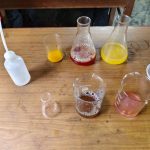
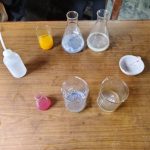
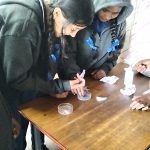
Take lemon juice and soap solution in separate containers. Dip red and blue litmus paper into each solution one by one and observe the colour change. Acids turn blue litmus paper red, while bases turn red litmus paper blue. Neutral solutions do not change the colour of either litmus paper.
3. Observing Different Cells Through a Microscope
Prepare temporary slides of onion peel (plant cell) and cheek cells (animal cell). Place each slide under a microscope and observe them under low and high magnification. The onion peel cells appear rectangular with a distinct cell wall, while the cheek cells appear irregular or rounded and lack a cell wall.
4. Turmeric and Red Rose Extract Activity to Detect Acids and Bases
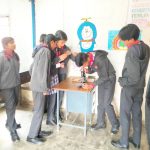
Prepare turmeric indicator using turmeric paste and red rose extract by soaking red rose petals in warm water. Add different solutions such as lemon juice and detergent water to each indicator and observe the colour changes. Turmeric remains yellow in acids but turns reddish-brown in bases. Red rose extract turns pink/red in acids and green in bases.